
How to Spot and Dispute Fake or Incorrect Medical Bills: In the modern and fast-paced healthcare environment, medical billing errors occur more than you think. Independent healthcare providers, small to mid-sized medical practices, and clinics usually find themselves overwhelmed with a great volume of medical claims and complex billing systems. It can lead to errors that can result in patients or insurance companies receiving incorrect medical bills, which can affect revenue collection and client satisfaction.
At TueCa RCM™, we are a medical billing company and help healthcare providers wade through the complexities of medical billing or coding to ensure accurate claims and faster repayment. Even with the professional billing services, healthcare administrators and providers need to understand how to spot and dispute fake or incorrect medical bills.
This blog will help to understand the steps for spotting errors and understanding billing mistakes, and disputing inaccurate medical bills to protect your practice’s financial health and maintain the trust of your patients.
Table of Contents
Understand the Basics of Medical Billing
Before we are going to understand how to spot or dispute fake or incorrect bills, it is important to understand the basics of medical billing:
- Patient Information: Name, insurance details, and contact information.
- Provider Information: Name, practice, and contact details of the healthcare provider or facility.
- Service Codes (CPT and ICD Codes): These are codes used to describe procedures, diagnoses, and services.
- Charges: The cost of services rendered, including consultations, treatments, and surgeries.
- Insurance Adjustments/Payments: Amount covered by insurance.
- Balance Due: The remaining amount owed by the patient.
Recognizing Common Mistakes on Medical Bills
While your bills are handled by an experienced team, errors can still occur. Some common mistakes that the healthcare provider and patients should look out for may include:
a) Duplicate Charges
A patient may receive a bill that charges them 2-3 times for the same services. This can occur due to a system error, human error, or incorrect coding. It is advised to ensure that you are not being billed for the same procedure or service more than once.
b) Incorrect Patient Information
Incorrect patient information can be another common reason that can lead to incorrect medical bills. Information like patient demographic information, patient insurance information, or mismatched coding for the procedures can be incorrect, which can lead to delayed payments or denied claims.
c) Out-of-Network Billings
Out-of-network billings occur when the services are rendered from an out-of-network provider without the patient being aware. This simply means that patients have to pay more out of the pocket once insurance pays their share. Billing administrators should carefully verify claims for out-of-network charges that may have been unintentionally billed, as these can lead to unexpected patient costs and disputes.
d) Unbundling Services
Unbundling services can occur when the provider bills for several components of the service incorrectly, indicating that each component of the service should be billed as a stand-alone service instead of a single bundled code.
e) Upcoding
Upcoding is the practice of using a higher-priced code for a service than what was actually provided. This practice involves overvaluing the difficulty of a service to receive a higher repayment, which is both wrong and illegal.
f) Balance Billing
Balance billing happens when a provider bills a patient for the difference between the amount the insurance pays and the total cost of care. This practice is not allowed in many circumstances and should be complex.
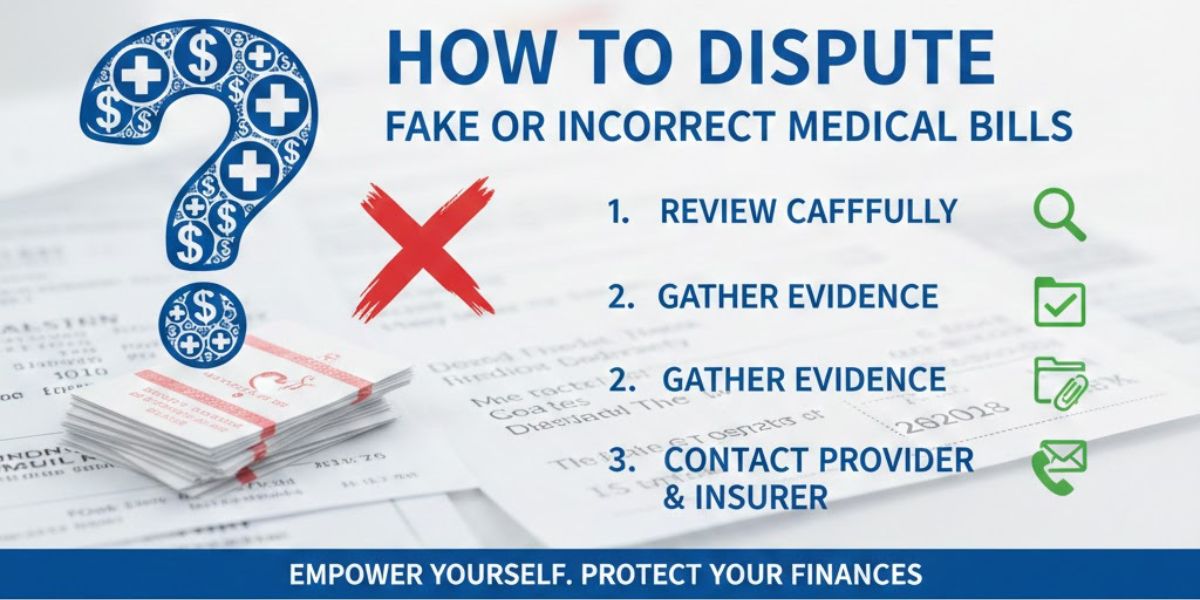
How to Dispute Fake or Incorrect Medical Bills?
When you identify the errors in a medical bill, it is important to take action quickly. Below is the step-by-step guide on how to dispute an incorrect or fake medical bill:
Step 1: Review the Bill Thoroughly
It is important to cross-check patient and provider information, procedure codes, and the amounts billed. You can compare the information with the internal records to confirm that the services were provided according to the list.
If there is any error, it is important to make a note of the exact issue. Issues can be a duplicate charge, an incorrect code, or any discrepancy. The more specific you can be, the easier it is to resolve the issue.
Step 2: Contact the Billing Department
If you have found an error, it is important to reach out to the provider’s billing department as soon as possible. Providers have a contact form for addressing the different kinds of issues. You need to be prepared to provide the specific information, including the patient’s name, service date, and details about the error.
When communicating with the billing department, ensure that you:
- Stay professional and calm.
- Provide all relevant details and documentation to support your claim.
- Request a correction in writing for your records.
Step 3: File a Dispute with the Insurance Company
If the billing error involves insurance, such as an incorrect claim submission or an issue with payment, it is important to contact the insurance company directly. The insurance companies have a formal appeal process that allows the healthcare providers to challenge erroneous payments.
You can ensure that it may:
- Include a copy of the disputed bill.
- Provide any supporting documents that explain why the charge is incorrect (e.g., medical records, itemized receipts, etc.).
- Clearly state the desired resolution, such as an adjustment or reprocessing of the claim.
Step 4: Document Everything
You can create a record of every recorded interaction in the dispute process. This documentation may include any emails, notes of the phone calls, and written correspondence. Keeping an accurate record in case the disputes can help keep your claims moving along.
Step 5: Follow Up Often
Billing disputes can take time to work through and, in some cases, could be complex due to coding issues or billing policies set out by the insurance company. It is important to check in with both the billing department and insurance company occasionally to make sure they are making progress with your claim during the dispute process.
If your dispute takes longer than reasonable, you may need to escalate by requesting to speak to a supervisor or manager. It is also beneficial to consider utilizing a medical billing service provider like TueCa RCM™ that has extensive experience working on complex conflicts.
The Role of Professional Billing Services in Preventing Errors
Most healthcare providers can manage their billing process, but a reliable company like TueCa RCM™ can offer numerous advantages. The company is experienced and has clinics, private practices, and healthcare professionals. TueCa RCM™ can help healthcare providers to:
- Ensure accurate coding for the submission of every claim.
- Provide compliance with the federal and state regulations.
- Handle denials and appeals promptly, improving reimbursements and patient satisfaction.

You can contact us at https://carelinkbillingservices.com/ to know more about the Medical Billing services we offer. Email us at info@carelinkbillingservices.com and call or text us at 307-222-1189.
Conclusion: Proactive Measures for Preventing Billing Errors
The healthcare billing process is complicated, but being vigilant and proactive to find errors is essential for keeping your practice running smoothly and financially viable. As a healthcare provider, carefully checking bills, keeping on top of coding updates, and working with a knowledgeable billing company such as TueCa RCM™, goes a long way toward reducing exposure to fake or erroneous medical bills.
Regardless of whether you keep your billing in-house or have it outsourced to a professional service, staying educated about common billing-related errors and knowing how to dispute errors will be beneficial in blocking potential problems in your revenue cycle and appropriately billing your patients.
If you need help with your medical billing or disputing, TueCa RCM™ partners with providers, clinics, and private practices to streamline revenue cycle processes, reduce billing errors, and improve reimbursement timelines. Contact us today, and we will gladly educate you on processes to minimize errors, optimize reimbursements, and remain compliant.
Frequently Asked Questions:
Question 1. Who can dispute a medical bill?
Answer. A patient named on the bill or the responsible party can formally dispute the charges simply by contacting the provider or insurer. They can do so ideally in writing with the supporting documentation.
Question 2. Why should healthcare practices partner with a billing service provider?
Answer. By partnering with a knowledgeable billing service provider, healthcare practices can focus on providing high-quality care while leaving the complexities of billing to the experts.
Question 3. How do medical billing companies help healthcare providers?
Answer. Medical billing companies such as TueCa RCM™ can help healthcare providers through the complexities of medical billing and coding and revenue cycle management to ensure accurate claims and faster reimbursement.
Question 4. What is medical billing?
Answer. Medical billing involves a detailed and precise process of submitting claims for medical services rendered to insurance companies or patients. Incorrect billing can occur at any step, from data entry errors to misinterpretation of coding rules.