
When you receive medical treatment, it’s typically expected that your health insurance (if you have it) and the hospital or provider will handle billing. But what happens when a medical bill remains unpaid, and the provider sends it to a collection agency? Many people wonder: Is it illegal for them to do that? The short answer is: usually no, sending unpaid medical bills to collections is legal—but only when certain rules are followed. If the process is mishandled, you may have legal recourse.
In this blog, we will get to know how it should be done legally and why it matters.
Table of Contents
What Does “Sending to Collections” Mean?
A medical provider (hospital, clinic, doctor’s office) bills you for your share of the cost (after insurance, if any). If you don’t pay (or negotiate) within that provider’s timeframe, the provider may refer or sell the debt to a third-party collection agency or collection law firm. That agency then tries to recover payment from you.
It’s important to recognise there are two distinct parts here:
- The bill generation and billing process by the provider.
- The collection process is conducted by the provider themselves or a third-party collector.
- Even though the whole process feels like “they’re chasing me for money,” legally, the referral/collection step is separate and subject to rules.
When Is It Legal to Send Medical Bills to Collections?
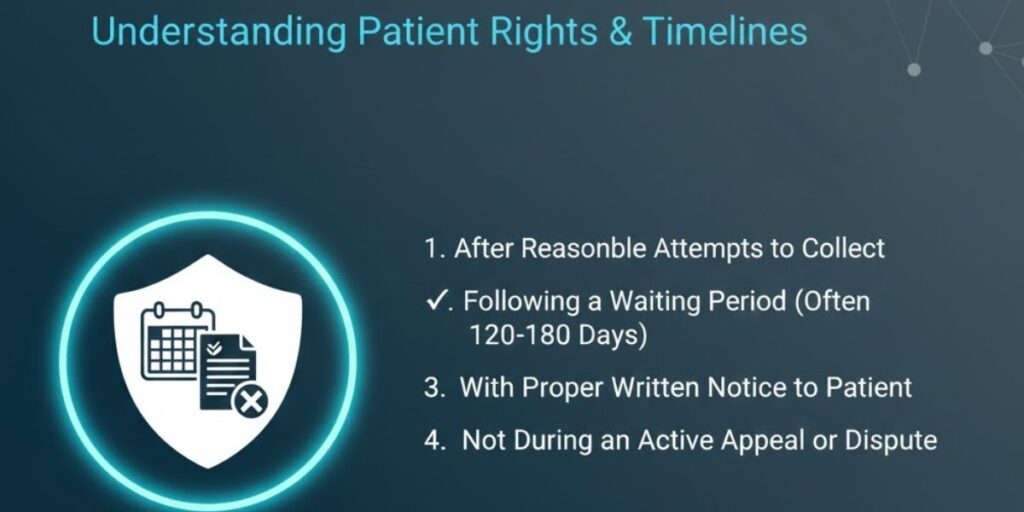
In the U.S., a provider or collector may refer medical debt to collections when:
- The bill is valid (you received treatment, the provider billed properly).
- You were given notice (you were billed or informed of the amount due).
- A reasonable period has passed for payment (often 30-60 or more days).
- The collector follows the federal laws on debt collection — for example, the Fair Debt Collection Practices Act (FDCPA) and the Fair Credit Reporting Act (FCRA).
- If applicable, they do not attempt to collect amounts that are legally prohibited (for example, bills that violate the No Surprises Act).
- If a collection agency is used, HIPAA privacy rules are followed (disclosing only the minimum necessary patient info; business‐associate agreements if required).
Thus, yes—generally, it is lawful that medical bills can be sent to collections when due and unpaid, provided the process is proper.
When Could It Be Illegal or Unlawful?
There are many scenarios in which the collection of medical bills may become illegal or subject to challenge. Here are several common triggers:
The bill is not actually owed (e.g., you never received the service, the insurance already paid, or you are covered by charity assistance). The Consumer Financial Protection Bureau (CFPB) has warned about collectors pursuing inaccurate or invalid medical debts.
The provider/collector uses misleading or harassing practices, such as threatening arrest, repeatedly calling outside normal hours, or misrepresenting your rights. These violate FDCPA protections.
The debt is one that the law says cannot be collected or reported (for example, due to state law protections before referrals, or a bill that violates transparency/disclosure laws). For example, some states require certain waiting periods before sending to collections.
The debt is sent to a credit bureau or reported improperly (e.g., before the one-year waiting period or for very small amounts), which may violate FCRA or CFPB rules.
The HIPAA rules are violated – e.g., excessive disclosure of protected health information (PHI) beyond “minimum necessary” when engaging a collection agency.
If any of these apply, you may have grounds to dispute the debt, challenge the collection action, or report the collector to regulatory authorities.
What to Do If Your Medical Bill Is Being Sent to Collections?
If you find yourself facing a medical bill sent to collections, these steps can help:
- Get an itemised bill / “superbill.” Verify that the services listed are correct, the dates of service are right, and the amount matches what you owe (after insurance).
- Check your insurance and any assistance eligibility. If insurance paid or you qualify for hospital financial aid/charity care, you may not owe much or anything.
- Communicate early with the provider. Ask about payment plans, reduced or discounted amounts, and explain your situation. Many providers are willing to help.
If you’re contacted by a collector:
- Ask for verification of the debt (who the original creditor is, the amount owed, and how the debt was calculated).
- If you dispute the debt, write a dispute letter and send it by certified mail. Under FDCPA, the collector must cease collection activity until validation.
- Keep detailed records of calls, letters, payments, and dates.
- Know the law and your rights: You may have state‐specific protections (waiting periods, caps, statute of limitations).
- Impact on credit reports: Under recent changes in the U.S., major credit reporting agencies are limiting how unpaid medical debt is reported (for example medical collections under $500 may not be reported) and paid medical collections may be removed.
- If you believe the collector or provider is acting illegally: Consider filing a complaint with the CFPB, your state Attorney General, or consult a consumer rights attorney.
Why It Matters (and What’s Changing)
Medical debt is a major burden for many people. The CFPB reports that medical bills are the most common collection item on consumers’ credit reports — and that many of those bills include errors or are being collected even though they were paid or shouldn’t be owed.
Regulators have emphasised that while sending medical bills to collections is not per se illegal, the practice must be fair, accurate, and transparent. For instance, the CFPB issued guidance that collectors may violate federal law if they attempt to collect amounts that exceed legal limits under the No Surprises Act.
In short, the system is shifting to give more protection for consumers facing medical debt.
FAQs
Q: So, is sending a medical bill to collections always legal?
A: No — but yes with caveats. It is generally legal if the bill is valid, you owe it, enough notice has been given, and the collector operates within the law. However, if the debt is invalid, misrepresented, or the collector uses illegal practices, it becomes unlawful.
Q: Does the biller/provider have to wait a certain time before sending to collections?
A: There is no federal law that says “must wait 120 days” before sending medical bills to collections. Some states do have specific waiting periods or requirements (for example, California regulates 180 days in some cases). But many providers refer much sooner (30–60 days) so it depends on provider policy and state law.
Q: Can they send my medical bill to collections if I’m making payments?
A: Yes — unless you have a formal payment agreement. Simply making a small payment does not always stop issuance to collections if the provider deems the account delinquent.
Q: Can a collection agency sue me over a medical bill?
A: Yes — if the debt is valid and within the statute of limitations, a collector (or original provider) may sue to collect. You should respond to any lawsuit. Statutes of limitations vary by state.
Q: Does sending medical bills to collections violate HIPAA?
A: Not automatically. Under the federal Health Insurance Portability and Accountability Act (HIPAA), “collection activities” are considered a permitted use of protected health information for “payment” purposes. But the provider or collector must follow the “minimum necessary” rule and ensure appropriate business-associate agreements.