
Since the start of 2025, more than 29 million patient records have been made available to unauthorized persons and it has affected the patients. The healthcare industry in the U.S. was hit the hardest in 2024 when it recorded a shocking 566 data breaches, leaking more than 170 million patient records – an increase of 164 million from 2010. Patient data is being put at risk more and more, and the pressure for healthcare organizations is at its peak.
For the companies that operate in healthcare – whether hospitals, doctors’ offices, or providers of healthcare software as a service (SaaS) – being compliant with HIPAA regulations is mandatory. It’s a fundamental requirement to secure sensitive patient information, prevent expensive fines, and gain patients’ and enterprise clients’ trust.
This article describes what HIPAA is, what its requirements are, and the route of compliance via HBMA-HCP.
Table of Contents
What is HIPAA?
The Health Insurance Portability and Accountability Act of 1996 is a U.S. federal statute that imposes a set of national rules for the protection of sensitive information regarding patients’ health. Although its primary purpose was to facilitate the transfer of health insurance and to cut down on administrative inefficiencies, nowadays HIPAA is synonymous with its stringent patient privacy and security requirements under Protected Health Information (PHI).
With time, HIPAA has turned out to be the ultimate parameter for healthcare data protection, dictating how patient files are accessed, distributed, and they are likewise kept secure in clinical and digital ecosystems.
HBMA’s Place in HIPAA Compliance
The Healthcare Business Management Association is a professional group for companies that perform revenue cycle management (RCM) activities, such as patient billing, for medical practices. HBMA has a Compliance Accreditation Program for its members and the healthcare community.
Sets the standards: The program of HBMA sets the scenario for the decay of protected health information secure tags (PHI) by imposing adherence to the Health Insurance Portability and Accountability Act (HIPAA) and other government regulations concurrently.
Provides accreditation: The program executes an exhaustive survey over the policies and practices of an organization, among which the security risks, staff training, and handling of documentation comes first. The organizations that comply with these requirements are granted accreditation, which serves as proof of compliance for the clients.
HCP’s role in compliance
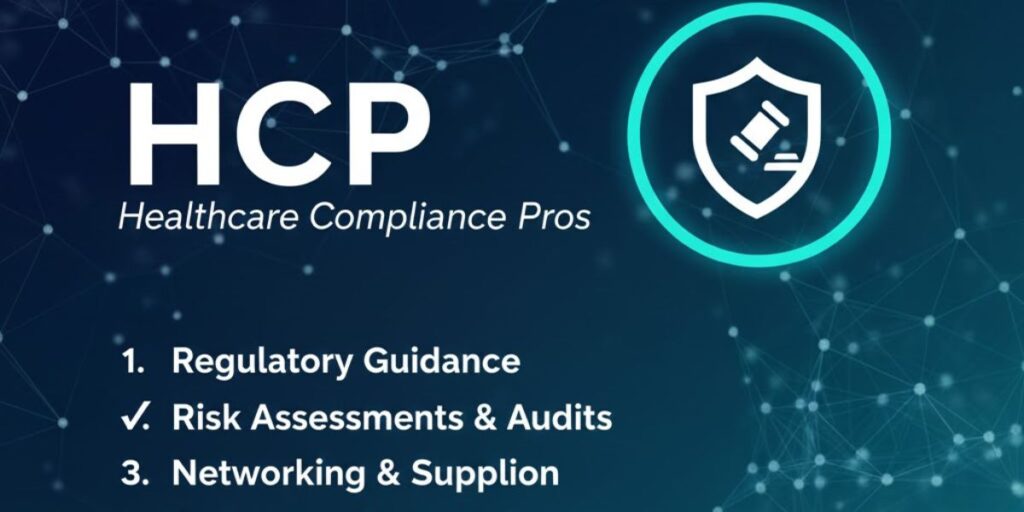
The Healthcare Compliance Pros (HCP) is a supplier of compliance services that caters to the healthcare sector and its business partners.
Expert guidance: HCP provides professional advice and tools for technology to the client so that they can make and maintain their compliance programs. HCP customizes the policy and procedure for every client according to their specific needs.
Continuous management: The “managed” compliance approach presented by HCP is continuous and helps organizations to be aware of every regulatory change. The healthcare company can then concentrate on its core business.
Validation of compliance: It was heard in the year 2018 that HCP is collaborating with HBMA to provide the technology platform for the HBMA Compliance Accreditation Program.
The Journey To Enhanced Data Protection
For an HBMA member healthcare business, the journey to HIPAA compliance will probably be using this path:
Engage with HCP: The firm engages HCP for the purpose of building or assessing its internal compliance program, using HCP`s platform and expertise to deal with technical, administrative, and physical safeguards.
Conduct self-audits: The firm, assisted by HCP, carries out self-audits and risk evaluations regularly, the purpose of which is to discover loopholes and also confirm that it is compliant with the HIPAA standards.
Implement policies and procedures: The Company updates its policies and procedures concerning PHI handling, employee training, and breach notification as a result of the audits.
Pursue HBMA accreditation: After the compliance program is solid, the company applies for HBMA Compliance Accreditation. The assessment procedure, which includes HCP’s technology and expert supervision, confirms the organization’s compliance with HIPAA and OIG standards.
Achieve marketability: The firm can communicate to customers that its compliance program has been validated by an independent entity, thus offering a competitive advantage by the mere fact of being accredited.
TueCa RCM™ – HBMA Accredited for Excellence in Compliance
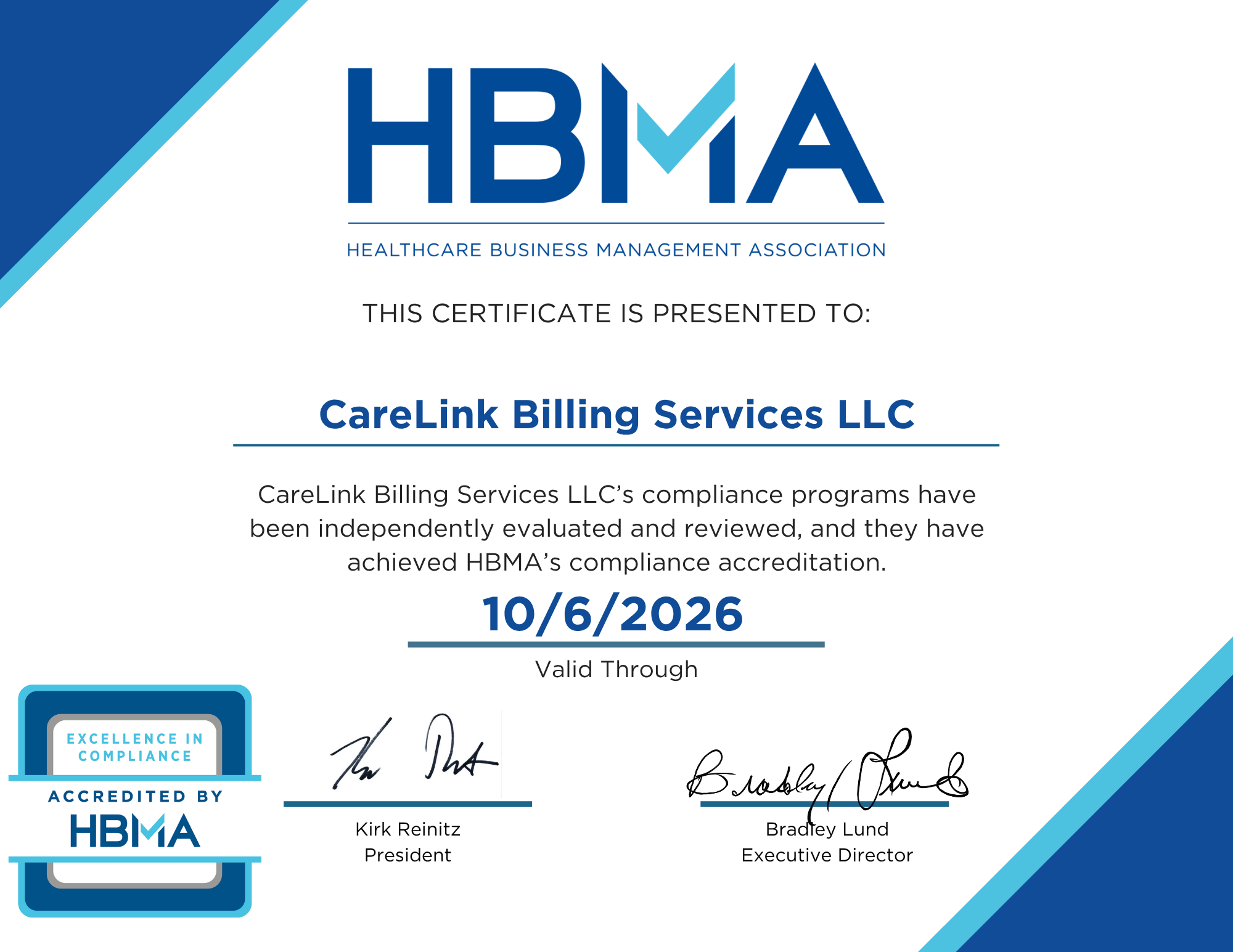
TueCa RCM™ has achieved its excellence in compliance through HBMA. Its compliance programs have been independently evaluated and reviewed. With HBMA accreditation, TueCa RCM™ has now become a more reliable and trustworthy medical billing company for healthcare providers.
With the help of the accreditation, TueCa RCM™ can make clients understand that the company values an environment of compliance. Moreover, it protects the company from any kind of fines, sanctions, or jail.
Final Words
In conclusion, the headline indicates the adoption of a business strategy, i.e., to use the HBMA’s accreditation and HCP’s compliance technology as the mainstay for strong patient data protection and gaining a competitive advantage.